How Thick Should a Concrete Driveway Be? What Homeowners Should Check Before Hiring a Contractor
When planning a new concrete driveway, slab thickness is one of the details worth understanding before accepting an estimate. A driveway needs to support the vehicles that use it, but its performance also depends on the ground beneath it, the concrete specifications, and how the work is carried out.
For many residential driveways, a 4-inch slab is a common starting point. However, that does not make it the right specification for every property. Heavier vehicles, site conditions, and the intended use of the driveway can affect the design.
If you are comparing estimates from concrete driveway contractors, ask each contractor to explain the proposed thickness and what is included in the installation. Understanding these details can help you compare bids based on the work being offered, rather than price alone.
How Thick Should a Residential Concrete Driveway Be?
The appropriate thickness depends on the driveway's intended use and the conditions at the property.
A conventional residential driveway used mainly by passenger cars may be designed around a 4-inch concrete slab. Driveways expected to support heavier vehicles, frequent deliveries, or other demanding loads may require a different specification.
The important point is that thickness should be determined as part of the overall installation plan, not selected as an isolated number.
Consider the Vehicles Using the Driveway
A driveway used for everyday cars has different demands from one that regularly accommodates a large recreational vehicle, work truck, or heavy equipment.
Before finalizing the design, consider which vehicles will use the driveway, where they will be parked, and whether heavy loads will occur regularly. These details help the contractor determine whether a standard residential specification is suitable or whether a more substantial design is needed.
Evaluate the Ground Beneath the Slab
Concrete thickness alone cannot compensate for an inadequately prepared base. If the supporting soil is weak, uneven, or prone to movement, the slab may develop problems even when the concrete itself is suitable.
Site preparation should account for existing ground conditions and the support required beneath the driveway. Depending on the property, this may involve excavation, grading, and preparing a suitable base.
For homeowners comparing installation options, Crockett & Sons Concrete's new concrete driveway checklist provides a related resource on planning a driveway project.
Account for Local Weather and Drainage
In areas that experience freezing temperatures, moisture management matters. Water that collects around or beneath a driveway can contribute to deterioration, particularly when freezing and thawing occur repeatedly.
The concrete mix, surface drainage, base preparation, and curing practices all influence performance. Simply increasing the slab thickness does not resolve every weather-related concern.
A contractor should consider how water moves across the property and whether the proposed driveway will drain appropriately.
Why the Lowest Concrete Driveway Bid May Not Be the Best Value
A lower estimate is not necessarily a sign of poor workmanship. Contractors may have different overheads, equipment, scheduling, or approaches to completing a project.
However, two estimates can look similar on paper while covering different amounts of work. Reviewing the specifications helps reveal those differences before you make a decision.
Check the Proposed Concrete Thickness
Ask each contractor to state the planned slab thickness in the written estimate. Confirm whether the specification applies consistently across the driveway and whether any areas require a different design.
A bid that proposes a thinner slab than another contractor may be less expensive, but the difference should be explained in terms of the driveway's intended use and site conditions.
Do not assume that the thickest proposal is automatically the best. The specification should suit the project rather than simply exceed another contractor's recommendation.
Compare Site Preparation
The work beneath the concrete is just as important to evaluate as the finished surface.
Ask what the estimate includes for excavation, grading, base preparation, and addressing unsuitable ground. Also clarify whether the contractor has identified any existing drainage or soil concerns that could affect the project.
If one bid includes substantial preparation and another does not explain it, the prices may not represent equivalent work.
Ask About the Concrete Mix
Concrete specifications should be appropriate for the intended application and local exposure conditions.
Ask the contractor what concrete specification is proposed and why it is suitable for your driveway. Depending on the project, relevant details may include the specified compressive strength and requirements related to outdoor exposure.
A higher strength rating does not automatically compensate for poor preparation, unsuitable drainage, or an inadequate design. The concrete must be appropriate for the complete installation.
For more information about concrete strength, see the related Concrete PSI: A Homeowner's Guide.
Clarify Reinforcement and Other Inclusions
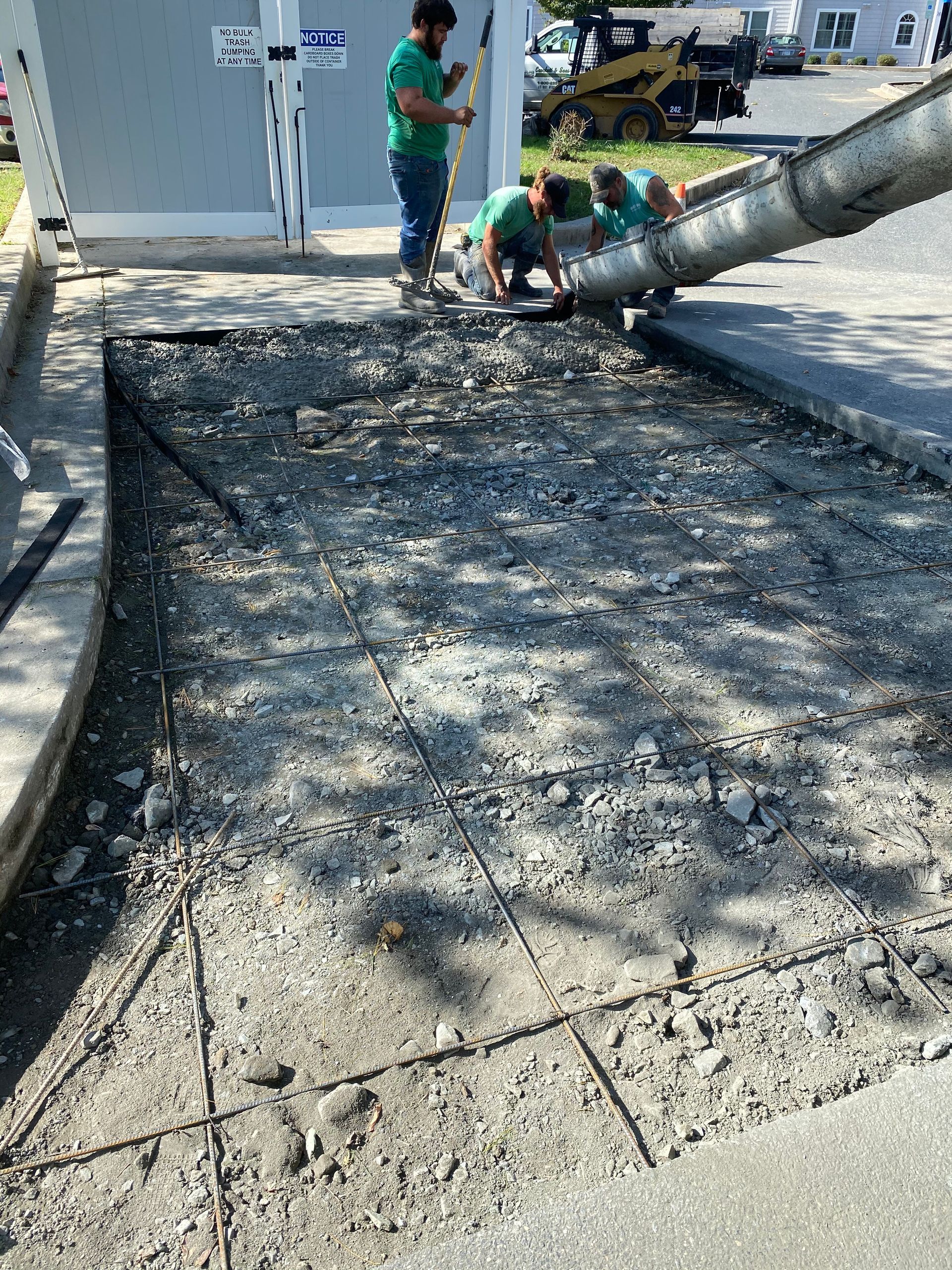
Depending on the design and site conditions, a driveway specification may include reinforcement or other measures to help manage cracking and support performance.
Ask whether reinforcement is included, what type is proposed, and how it will be installed if required by the design. Also check whether the estimate covers joints, finishing, cleanup, and any necessary adjustments to the surrounding area.
These details help you understand what each contractor is actually offering.
What Should You Ask Concrete Driveway Contractors Before Hiring Them?
Before accepting an estimate, ask questions that make the proposed work clear.
- What thickness are you recommending? Ask how it relates to the vehicles, site conditions, and expected use.
- What preparation is included? Clarify excavation, grading, base preparation, and any anticipated repairs.
- What concrete specification will be used? Request an explanation of the mix and its suitability for the project.
- How will drainage be addressed? Confirm how the finished driveway will direct water away from the home and other sensitive areas.
- What does the price include? Check the scope for materials, labor, finishing, cleanup, and other agreed work.
- How will changes be handled? Ask how unexpected site conditions or additional work will affect the estimate.
Clear answers make it easier to compare proposals fairly. They also give you a written record of the agreed specifications before construction begins.
Is a Thicker Concrete Driveway Always Better?
Not necessarily. A thicker slab may be appropriate for heavier loading or particular site requirements, but adding thickness without considering the rest of the design does not guarantee better performance.
The supporting base, concrete properties, drainage, joints, and installation practices all influence how a driveway performs over time.
For example, a well-prepared base and suitable concrete specification are important even when a driveway has a relatively substantial slab. Conversely, a thicker slab installed over poorly prepared ground can still develop problems.
The goal is to select specifications that suit the property and intended use, rather than treating thickness as the only measure of quality.
Frequently Asked Questions
How thick should a concrete driveway be for regular cars?
A 4-inch slab is a common starting point for many residential driveways used by passenger cars. The appropriate specification can vary with soil support, loading, site conditions, and the overall design.
Does a concrete driveway need to be thicker for trucks or RVs?
It may. Heavier vehicles place greater demands on the driveway, so the contractor should assess the expected loads and supporting conditions before recommending a thickness. A thicker slab alone may not address every structural requirement.
Can poor site preparation cause a concrete driveway to crack?
Yes. Inadequate support, uneven settlement, and drainage problems can contribute to cracking. Proper preparation helps provide a more consistent base for the concrete, although no concrete driveway is completely immune to cracking.
Does higher-strength concrete mean a driveway will last longer?
Not automatically. Concrete strength is one factor in performance. Base preparation, drainage, slab design, curing, and construction quality also matter. The specified mix should suit the driveway's intended use and exposure conditions.
How can I compare concrete driveway estimates fairly?
Compare the written scope of work, including slab thickness, site preparation, concrete specifications, reinforcement where applicable, finishing, and cleanup. Ask contractors to explain differences rather than choosing solely by the lowest price.
How do I get an estimate for a new concrete driveway?
You can contact Crockett & Sons Concrete, Inc. to discuss your driveway project and request an estimate. Share details about the property, the vehicles that will use the driveway, and any known drainage or ground concerns to help establish the scope of work.
Plan Your Concrete Driveway With the Right Specifications
A successful driveway project begins with a clear understanding of the site's requirements and the work included in the estimate. Thickness matters, but it should be considered alongside the supporting base, concrete specification, drainage, and installation process.
When reviewing proposals, ask questions, compare equivalent scopes of work, and make sure the recommended specifications are explained before construction begins.
Explore Crockett & Sons Concrete's driveway services to learn more about the company's concrete driveway work, or contact the team to discuss your project.