Can You Pour a New Patio Over an Existing Concrete Slab?
An existing concrete patio does not always need to be demolished before you improve its appearance. Depending on its condition and the type of upgrade you want, a concrete overlay may be an option. However, adding a new layer of concrete over an old slab is not a suitable solution for every patio.
The key question is whether the existing slab can support the proposed work without creating problems with cracking, drainage, or the finished surface height. Before deciding, homeowners should understand the difference between applying a decorative overlay and installing a new concrete patio.
Experienced concrete patio contractors can assess the existing surface and help determine which approach makes sense for the property.
When Can You Pour Concrete Over an Existing Patio?
An existing slab may be suitable for an overlay when it remains stable, has no significant structural damage, and provides an appropriate base for the proposed installation. The surface must also be compatible with the overlay system being used.
Several factors influence this decision.
The Existing Concrete Is Structurally Sound
The first consideration is the condition of the original slab. A surface that looks worn or discolored may still be stable enough for a suitable resurfacing treatment. However, visible damage can indicate underlying problems that need attention.
Look for:
- Wide or uneven cracks: These may indicate movement beneath the slab rather than a minor surface defect.
- Uneven sections: Areas that have settled or lifted can make it difficult to achieve a consistent finished surface.
- Loose or deteriorating concrete: Flaking, crumbling, or damaged areas may prevent an overlay from adhering properly.
- Signs of water problems: Persistent pooling or erosion around the patio may indicate drainage issues that should be addressed before construction.
Repairing a small surface defect does not necessarily resolve the cause of a larger crack or settlement problem. If the original slab continues to move, that movement may affect the new surface as well.
For additional context on these problems, see Crockett & Sons Concrete's guide to common patio problems and how contractors address them.
The New Surface Will Not Create Height Problems
Adding material over an existing slab raises the finished patio level. Even a relatively small increase can affect door thresholds, steps, adjacent walkways, and the transition between the patio and the surrounding yard.
Water drainage is another important consideration. The finished surface should direct water away from the home rather than allowing it to collect near the foundation, enter doorways, or flow toward neighboring areas.
Before choosing an overlay, the contractor should evaluate the available height, the existing slope, and the location of nearby structures. If the additional material would interfere with drainage or create an awkward transition, removing the old slab and rebuilding the patio may be the more practical option.
The Proposed Overlay Is Suitable for the Existing Surface
Not every concrete overlay is the same. Some products are designed for relatively thin decorative resurfacing, while other applications involve placing a new concrete layer with different structural requirements.
A decorative overlay should not automatically be treated as equivalent to a new, full-thickness concrete patio. The appropriate material, preparation method, and installation requirements depend on the product and the condition of the original slab.
A bonding agent may be specified for certain systems, but it does not make an unstable or badly damaged slab suitable for an overlay. The preparation and installation method must follow the requirements of the chosen system.
When Should an Old Concrete Patio Be Removed?
In some situations, removing the existing concrete is a better long-term decision than covering it.
The Slab Has Significant Cracking or Movement
If sections of the original patio have settled, lifted, or separated, the underlying cause should be investigated before new material is installed. Covering the damage without addressing the movement can leave the same problem unresolved.
The appropriate solution may involve removing the affected concrete, correcting the base or soil conditions, and preparing the area for a replacement patio.
Water Drainage Cannot Be Corrected With an Overlay
A patio that directs water toward the house or holds water in low spots may require more than a new surface. Raising the level without correcting the slope could make the problem worse.
Removing the existing slab may allow the contractor to establish the appropriate grading and prepare a new base. Whether that work is necessary depends on the site conditions.
The Patio Needs a Complete Reconstruction
A homeowner may want a larger patio, a different layout, new steps, or a substantial change in elevation. These projects can require changes that a surface overlay cannot accommodate.
In these cases, demolition and replacement may provide more flexibility for preparing the base, planning drainage, positioning reinforcement, and determining the finished dimensions.
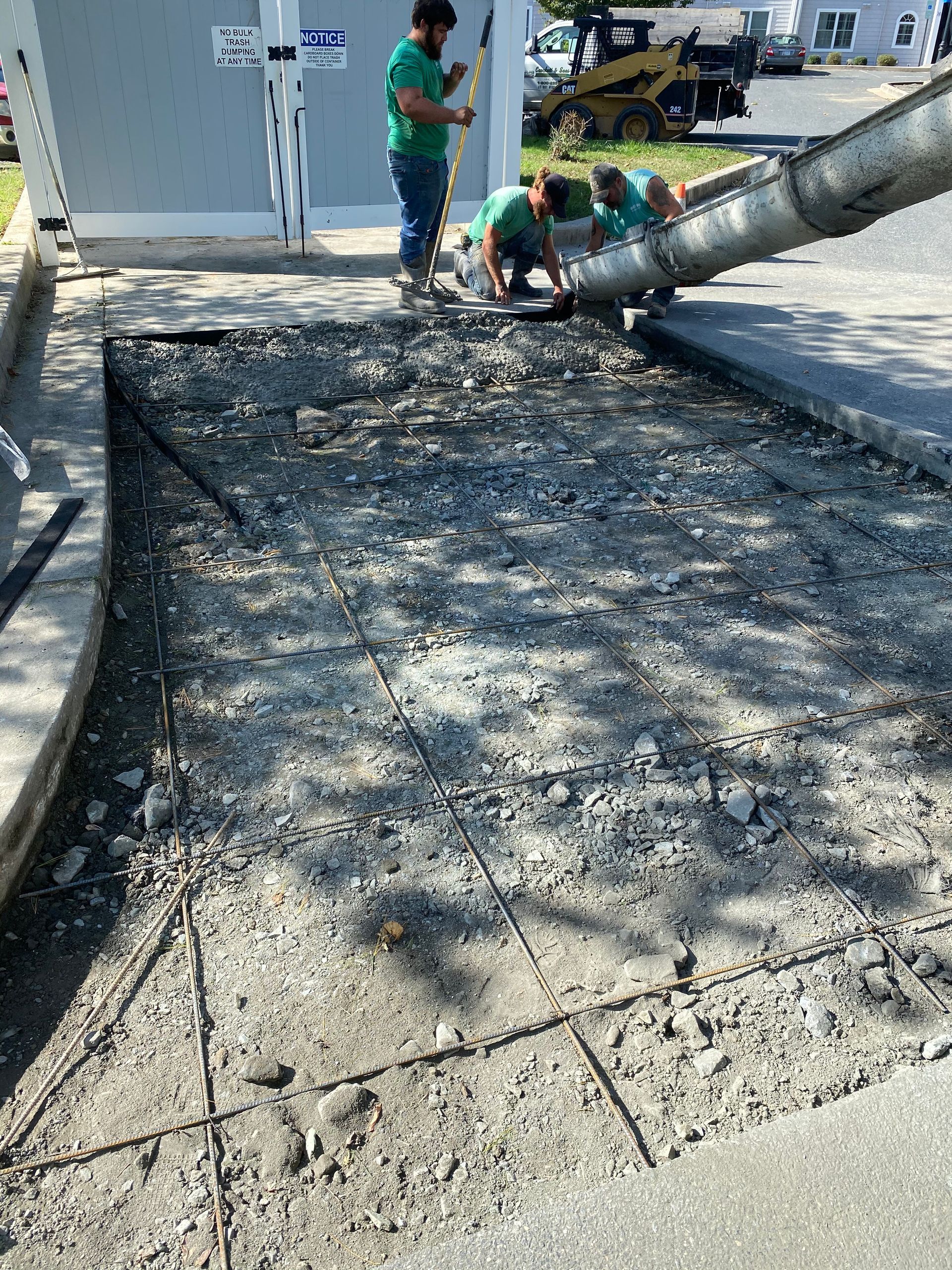
Crockett & Sons Concrete describes its concrete patio installation process, including demolition when needed, excavation, base preparation, reinforcement, and concrete placement. This is relevant when the existing surface cannot provide a suitable foundation for the proposed patio.
Is a Concrete Overlay Cheaper Than Replacing the Patio?
An overlay may reduce the amount of demolition and disposal required, but it is not automatically the less expensive option.
The overall cost depends on the condition of the existing slab, the preparation it needs, the type of overlay, the size of the patio, and any drainage or height adjustments.
For example, a stable slab that needs a compatible decorative resurfacing treatment may require less work than a patio that must be removed and rebuilt. However, if the existing concrete needs extensive repairs or cannot support the proposed installation, an overlay may add expense without resolving the underlying problem.
When comparing estimates, ask contractors to explain what preparation is included, whether repairs are necessary, and what the recommended solution is expected to address. Comparing the scope of work is more useful than comparing the initial price alone.
Can You Add Decorative Stamped Concrete Over an Old Patio?
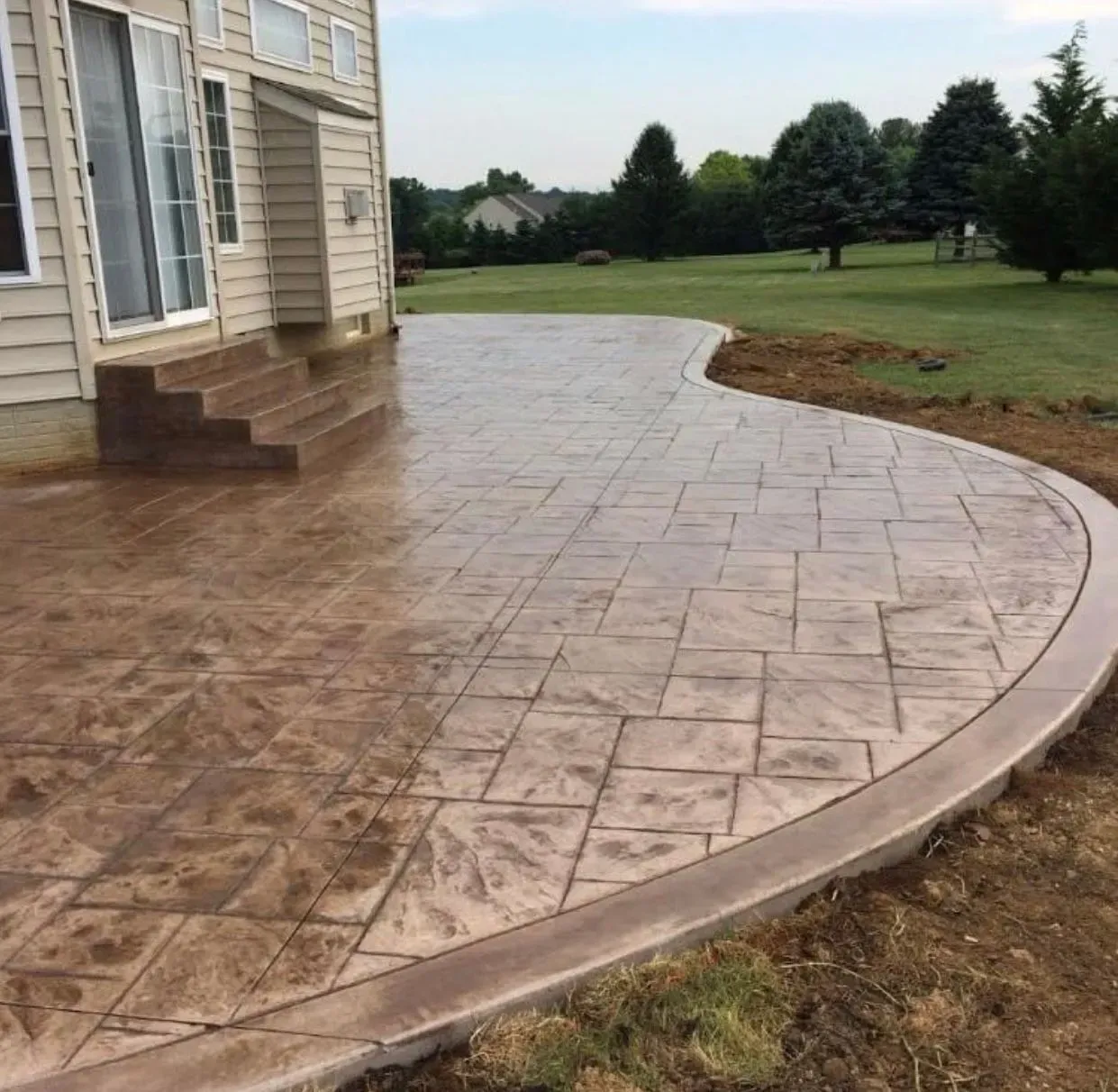
Decorative stamped concrete can create patterns and textures that resemble materials such as stone or brick. However, traditional stamped concrete installation and decorative resurfacing over an existing slab are different processes.
A new stamped concrete patio is generally formed and finished while the concrete is being placed. A decorative overlay uses a compatible resurfacing material designed for application over an existing surface.
Whether an existing patio can receive a decorative finish depends on the condition of the slab and the requirements of the selected system. The contractor should explain which installation method is appropriate rather than assuming that a new stamped surface can simply be poured over any old patio.
Crockett & Sons Concrete offers decorative stamped concrete and patio services, which homeowners can explore when comparing options for a new outdoor surface.
What Should a Contractor Check Before Recommending an Overlay?
Before work begins, a contractor should evaluate more than the visible condition of the concrete. The assessment should establish whether the proposed installation is appropriate for the site.
Important questions include:
- Is the existing slab stable, or are there signs of settlement and movement?
- Are the cracks limited to the surface, or could they indicate a deeper problem?
- Does the patio drain properly, and will the finished height affect nearby doors or walkways?
- Is the selected overlay compatible with the existing concrete?
- What surface preparation and repairs are required?
- Would removal and replacement provide a more suitable result?
- Are permits or other local approvals required for the proposed work?
Permit requirements vary by location and project scope. Changes involving grading, drainage, or other site conditions may require additional review. Homeowners should confirm the applicable requirements with the relevant local authority before construction begins.
A clear assessment helps homeowners understand the available options and the reasons behind the recommended approach.
Frequently Asked Questions
Can you pour a new concrete patio directly over an old one?
Sometimes, but it depends on the condition of the existing slab and the proposed installation. A stable surface may be suitable for a compatible overlay, while a badly cracked, uneven, or moving slab may need to be removed.
Will a new concrete layer cover cracks in the old patio?
It may conceal some surface imperfections, depending on the resurfacing system. However, an overlay does not eliminate the underlying cause of structural cracks or movement. Existing problems should be evaluated before the new surface is installed.
How thick should concrete be when placed over an existing patio?
There is no single thickness that applies to every overlay. The required thickness depends on whether the project involves a decorative resurfacing product or a new concrete layer, as well as the manufacturer's specifications and site conditions. A standard patio slab thickness should not automatically be applied to an overlay.
Does an old concrete patio need a bonding agent before resurfacing?
Not always. Some overlay systems require a specific bonding agent, while others use different preparation methods. The product specifications and condition of the existing surface determine the appropriate approach.
Is it better to resurface or replace an old patio?
Resurfacing may be suitable when the existing slab is stable and the work is primarily cosmetic. Replacement may be more appropriate when the slab has significant movement, extensive deterioration, drainage problems, or layout issues that cannot be corrected with an overlay.
Do you need a permit to resurface an existing concrete patio?
Requirements vary by jurisdiction and the nature of the work. A cosmetic resurfacing project may be treated differently from a project that changes grading, drainage, dimensions, or other site conditions. Check with the relevant local building authority before proceeding.
Find the Right Approach for Your Concrete Patio
Whether an existing patio can be resurfaced or should be replaced depends on its condition, the intended finish, and the requirements of the property. An overlay may be appropriate for a stable slab, but it should not be used to conceal problems that need a more complete solution.
Crockett & Sons Concrete, Inc. provides concrete patio installation, replacement, and decorative concrete services in its Maryland and Pennsylvania service areas. Homeowners considering an upgrade can contact the team to discuss the existing patio and request a project estimate.
A site-specific assessment can help clarify the available options before you commit to the work.